

Easter has been crazy busy in the shops, much more so than expected, and I had to make an emergency run of ice cream today. We ran out of several flavours, so I was up bright and early getting the mix ready and then freezing.
Besides the main flavours, I decided to do a Guinness ice cream, to have another Irish flavour in the cabinet. The recipe is below. Of course, being me, I couldn’t resist throwing in some chocolate chips. You don’t have to!
Murphys Guinness Ice Cream
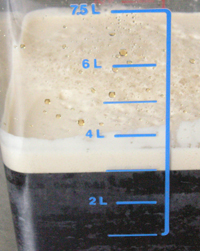 1 Cup (237ml) Sugar
5 Egg Yolks
1 1/8 Cups (266ml) Cream
1 1/8 Cups(266ml) Milk
500 ml Guinness
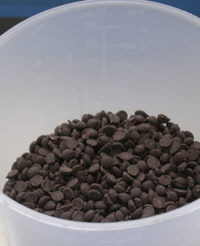
A handful of dark chocolate chips.
Yield: 6 Servings
1. Measure out 100ml of Guinness and set aside.
2. Boil the remaining 400ml Guinness until it reduces to 100ml in volume. Cool.
3. Beat the sugar and egg yolks together until thick and pale yellow.
4. Bring the milk to a simmer.
 5. Beat the milk into the eggs and sugar in a slow stream.
6. Pour the mixture back into pan and place over low heat. Stir until the custard thickens slightly (around 70C). Use a thermometer, as at 75C the eggs will scramble!
7. Allow the custard to cool.
8. Stir in both the reduced and non-reduced Guinness.
9. Whip the cream.
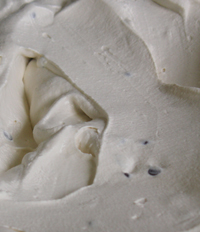
10. Gently fold in the custard.
11. Freeze using a domestic ice cream machine, or cover and place in the freezer.
Notes:
 1. I haven’t made this recipe for home use, so I would love any feedback if you try it!
2. The photo of 3 litres of Guinness is what I used. Don’t pay any attention to the volume!
3. I combine reduced and non-reduced Guinness because using just reduced loses a bit of freshness in terms of flavour.
4. You don’t have to use the chocolate chips of course, but I do think Guinness and chocolate go well together. You could also use this as a companion to a chocolate cake.
Technorati tags: chocolate chip, guinness, Easter, ice cream, recipe, Irish



 After my
  Higher cocoa content only brings more chocolate flavour up to a point. 70% chocolate has more chocolate flavour than 30% chocolate. However, if you go much above that, I believe you stop tasting the chocolate and you only have a taste sensation of “bitter.” The flavour complexity is lost without sweetness.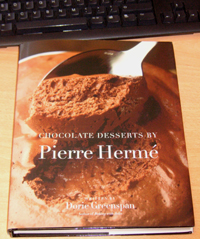
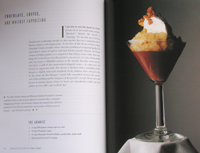
 Â One of my favourite ways to eat ice cream is wrapped in a crepe. The combination of the warm crepe with the cold of the ice cream and the textural sensation are delightful.
 One of my favourite ways to eat ice cream is wrapped in a crepe. The combination of the warm crepe with the cold of the ice cream and the textural sensation are delightful.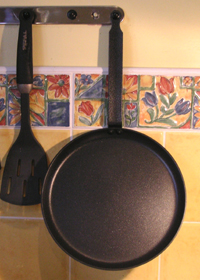 If you regularly make crepes or pancakes at home, I highly recommend getting a crepe pan. I picked the one on the right up at a catering store for around 12 euro. What a difference it makes! Not only do they come out the perfect size every time, but they don’t stick and cook better.
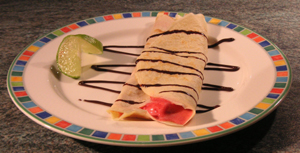 8. If you’re feeling artistic, decorate with
 Although probably most of you know all about this, I thought it might be a good idea to discuss a few tips on buying and storing ice cream. There’s not much to it, and it might be a boring subject, but it can make a big difference in terms of ice cream enjoyment when the spoon comes out!